Local SEO in Saint-Étienne: the guide to getting found on Google
Google Business Profile, customer reviews, local pages, directories: everything you need to set up to appear on Google and Google Maps when a customer searches for your trade in Saint-Étienne or the Loire.

When someone searches for “plumber Saint-Étienne,” “lawyer Montbrison” or “restaurant near me,” Google first shows a map with three businesses, followed by the top-ranking websites. Showing up in those results is a game-changer for a local business. That’s what local SEO is all about: making sure Google clearly associates you with your trade and your area, and then considers you worth recommending. Here’s a step-by-step method for local SEO in Saint-Étienne, tailored to businesses in the city and across the Loire.
How Google ranks local results
Google says it relies on three main factors for its local rankings:
- relevance: do your profile and your website match what the person is looking for?
- distance: how far are you from the person searching, or from the location specified in their search?
- prominence: is your business well known and well regarded, both online and offline? Reviews, links to your website and mentions of your business all contribute.
You can’t change distance, but you can work on the other two factors. That’s what the following steps are all about.
Step 1: a complete Google Business Profile
This is the most powerful lever, and it’s free. Your Google Business Profile (formerly Google My Business) is what appears on Google Maps and in the map section of search results.
To make it work for you:
- Choose the right primary category, as specific as possible (“Website designer” rather than “Computer service,” for example), then add relevant secondary categories.
- Fill in everything: hours, phone number, website, business description, services offered, service area.
- Add real photos: your premises, your team, your work. A profile with photos inspires more trust.
- Post regularly: news, offers, recent projects. An active profile shows a real, active business.
- Stay honest: the profile name must be your business’s real name, with no added keywords. This is a Google rule, and getting around it can get your profile suspended.
If you work at your customers’ locations, choose a “service area” profile: your home address stays hidden.
Step 2: customer reviews, on a regular basis
Reviews matter both to Google and to your future customers. A few best practices:
- ask every satisfied customer for a review, at the right moment: right after delivery or once the job is done;
- make it easy for them with the direct link to your profile (available in your Google Business Profile dashboard);
- reply to every review, positive or negative, courteously: prospects read your replies;
- never buy reviews or write them yourself: it’s prohibited and easy to spot.
A review that naturally mentions the service provided and the city (“WordPress website built for my practice in Saint-Étienne”) is especially valuable.
Step 3: a website built around your area
Your profile links to your website, and Google looks at it to understand your business. So it needs to clearly confirm what you do and where:
- clear titles: your homepage title and main heading (H1) combine your trade and your city;
- one page per service and, if you serve several areas, one page per area with genuinely tailored content (not the same text with only the city name swapped out);
- your full contact details on every page, in the footer: name, address or service area, phone number;
- structured data (LocalBusiness markup) that describes your business, hours and service area to Google;
- a fast mobile site, since most local searches happen on smartphones.
On this site, for example, each service area has its own page: Saint-Étienne, the Loire and Lyon, each with its own content, examples and FAQ.
Step 4: identical information everywhere
Google cross-checks the information it finds about your business. Your name, address and phone number must be exactly the same on your website, your Google profile, your social media accounts and the directories you’re listed in.
List your business in reputable, relevant directories: PagesJaunes (the French Yellow Pages), directories for your industry, your local Chamber of Commerce (CCI) or Chamber of Trades and Crafts directory, and the professional platforms in your field. There’s no point piling up low-quality directories: a few reliable, consistent listings are worth more.
Step 5: local links and mentions
Links from other websites boost your prominence, especially when they’re local and related to your business:
- partners, suppliers or customers who mention your business;
- Saint-Étienne nonprofits, clubs or events you support;
- local press or regional news sites;
- guest posts on blogs in your industry.
A single link from a well-known local site is worth more than dozens of links unrelated to your business.
Step 6: publish useful content
Blog posts that answer your customers’ questions (prices, timelines, comparisons, tips) attract qualified visitors and showcase your expertise. They also help you rank for more specific searches than your trade alone, such as “how much does… cost” or “how to choose…”.
Step 7: measure to improve
Two free tools are all you need to track your progress:
- Google Business Profile performance stats: profile views, calls, direction requests and clicks to your website;
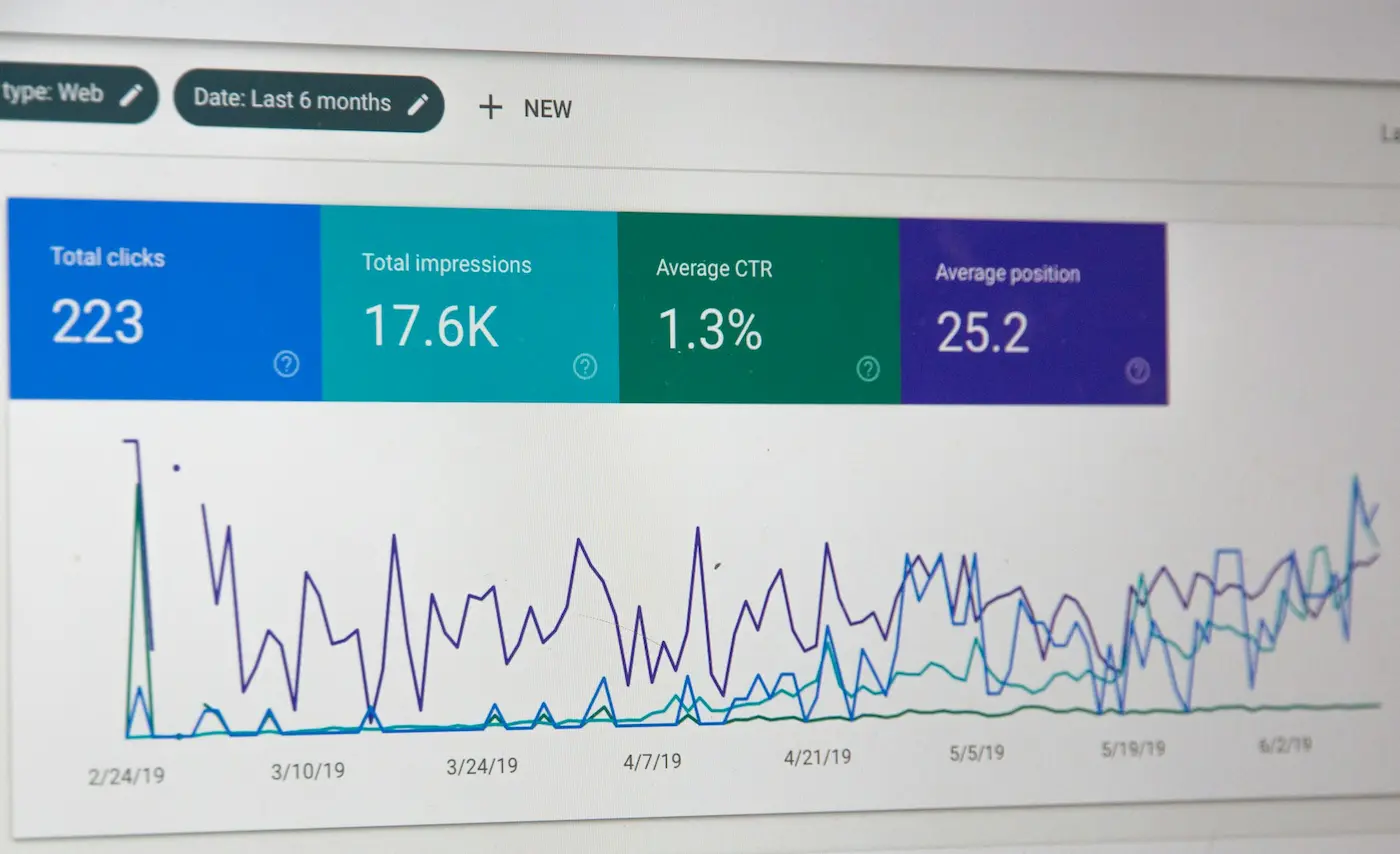
- Google Search Console: the searches your site appears for, your rankings and your most visited pages.
Check them once a month: you’ll quickly see what’s working and what needs more effort.
Mistakes to avoid
- Adding your city name or keywords to your Google Business Profile name.
- Creating several profiles for the same business, or a profile with a fake address.
- Copying the same text across all your local pages.
- Leaving your profile for months without replying to reviews or posting updates.
- Having a website that’s slow or hard to use on mobile.
Local SEO in Saint-Étienne in a nutshell
Local SEO rests on a simple trio: a complete, active Google profile, regular reviews and a website clearly tied to your area. It takes sustained effort, but it’s also the most cost-effective way for a local business to attract customers in Saint-Étienne and the Loire. Need a website built for local SEO, or a hand optimizing yours? Discover my WordPress SEO services or get in touch.
How long does it take to rank well locally?
The first effects of a complete Google Business Profile and an optimized website often show up within a few weeks. A strong position is built over several months, as reviews, content and links add up. No one can guarantee the top spot: competition and distance also play a role.
Do you need a physical address to appear on Google Maps?
No. If you travel to your customers or work remotely, you can create a service-area business profile: your address stays hidden and you list the towns you serve.
Do Google reviews affect rankings?
Yes. Google states that a business’s prominence, which the number and rating of its reviews help build, is one of its local ranking factors. Reviews also reassure prospects who are comparing several professionals.