Web Hosting and Domain Names: A Guide to Making the Right Choice
Choosing your domain name, understanding hosting, knowing what to insist on and how much to budget: everything you need to know before putting your website online, explained without jargon.

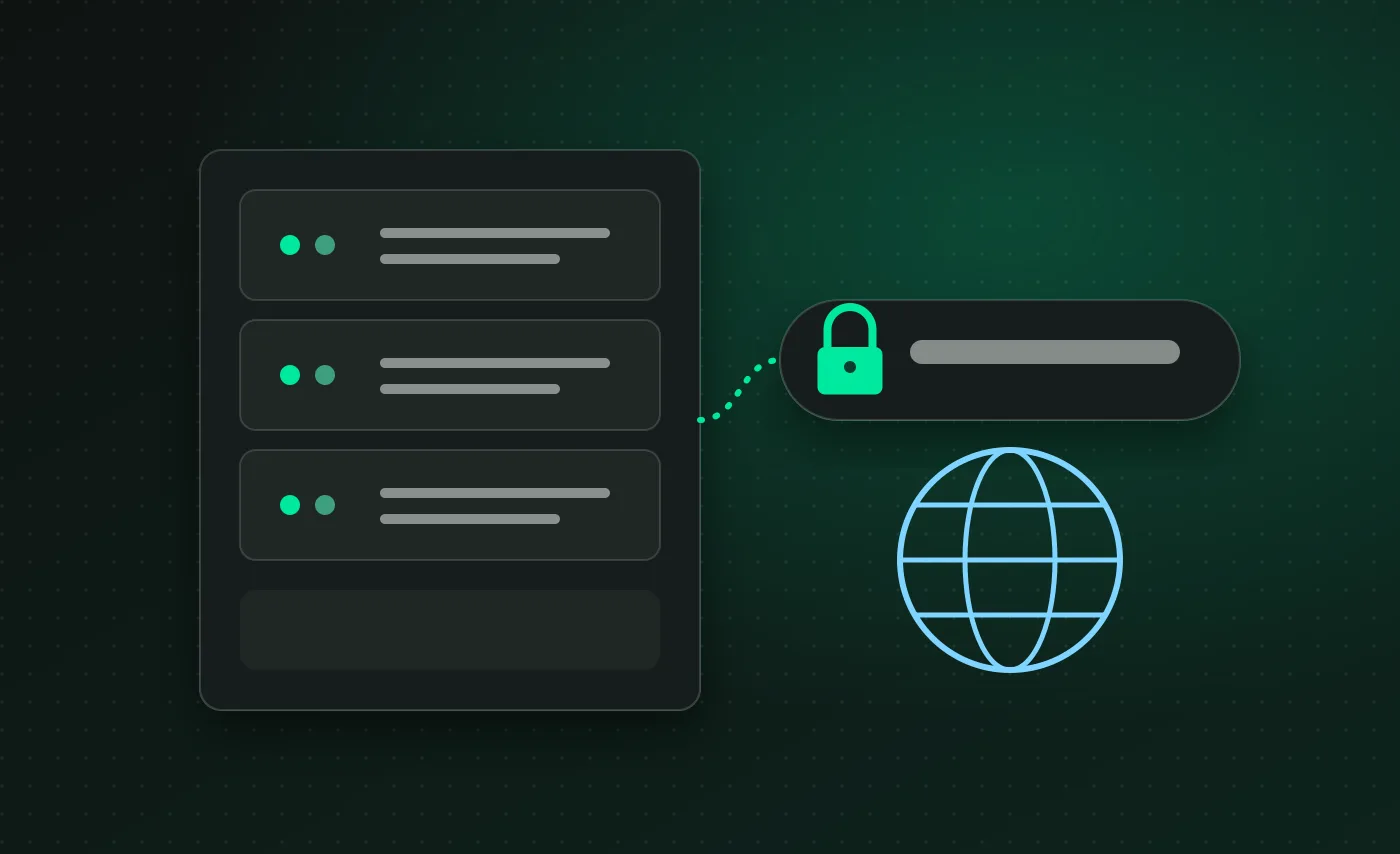
To exist on the internet, a website needs two things: an address, which people type into their browser, and a place where its files are stored. These are your domain name and your web hosting. Many business owners leave both to their provider without really knowing what they are, even though they determine who owns the website. Here are the essentials you need to know, explained without the jargon.
The domain name: your address on the internet
The domain name is the address of your website: for example, salmiazzeddine.fr. You don’t buy it once and for all: you rent it, year by year, from a registrar (OVH, Gandi, Ionos…). As long as you keep renewing it, it remains yours.
How to choose it well
- Short and easy to say: you’ll give it out over the phone, so people have to be able to write it down without any hesitation.
- Your business name, rather than a string of keywords: “dupont-plumbing.fr” rather than “cheap-plumber-saint-etienne-42.fr”.
- No hyphens or numbers if possible, to avoid typing mistakes.
- A .fr if you work in France, the extension managed by Afnic; a .com if you’re aiming for an international audience. If your budget allows, register both and redirect one to the other.
The golden rule: in your name
The registrant of the domain name is its owner. It must be registered in your name, or in your company’s name, with an email address that you actually check. If it’s in your provider’s name, you depend on their goodwill the day you want to change your website or your partner.
Also turn on automatic renewal: an expired domain name can be bought by someone else, and your email addresses stop working overnight.
Web hosting: where your website lives
Hosting is a computer that runs around the clock in a data center, stores your website’s files and sends them to every visitor. There are several types, each suited to different needs:
- shared hosting: you share a server with other websites. It’s the right solution for the vast majority of business websites, since it’s affordable and maintained by the host itself;
- a dedicated or virtual server: a server just for you, more powerful, but one that takes technical skills to administer. Useful for large sites or applications;
- managed WordPress hosting: shared hosting optimized for WordPress, with backups and updates made easier.
What good web hosting should offer
- a free HTTPS certificate, for the little padlock in the address bar;
- automatic backups that you can restore yourself;
- servers in Europe, preferably in France, for speed and GDPR compliance;
- recent versions of PHP if your site runs on WordPress;
- support you can actually reach, in your language if possible;
- email addresses on your domain name (contact@your-business.fr), which are often included.
Where are your web hosting servers located?
Server location isn’t a minor detail. Web hosting based in France or in the European Union brings your website closer to your visitors, which makes it faster, and makes it simpler to comply with the GDPR for the data sent through your forms. Reputable hosts clearly state where their data centers are located, and often let you choose the country when you place your order. It’s a piece of information to check before signing up, just like the price or the quality of the support.
Traps to avoid
- A domain name in the provider’s name: it’s the most common trap, and the hardest one to undo.
- Locked-in “all-inclusive” offers: some website builders don’t let you take your site elsewhere. The day you decide to leave, you have to start again from scratch.
- The cheapest hosting at any cost: a slow or frequently unavailable website costs you customers and drags down your search rankings. If your site is sluggish, my article on how to speed up a WordPress site actually starts with hosting.
- Forgetting your logins: write down your registrar and hosting credentials, and keep them somewhere safe where you can find them.
How much should you budget?
As a rough guide, a .fr or .com domain name generally costs between ten and twenty euros a year, and shared hosting for a business website a few euros a month. Be wary of very low introductory prices in the first year, which go up sharply at renewal time: always check the price that applies “from the second year onward”.
Also think about professional email addresses: depending on the plan, they’re either included with the hosting or billed separately, per mailbox and per month. Work out how many addresses you need before choosing, so that you’re comparing truly equivalent offers.
Who should take care of it?
You can perfectly well let your provider manage the domain name and the web hosting for you: it’s even simpler that way. What matters is that you remain the owner, with all the access details. When I build a website, that’s always the rule: the domain name and the hosting are in your name, and I take care of the setup.
The bottom line
A short domain name, in your name, renewed automatically; reliable web hosting, in Europe, with HTTPS and backups: that’s the solid foundation every website is built on. For the rest of the budget, see my article on how much a WordPress website costs, and if you’d like support all the way from buying your domain name to going live, let’s talk.
Should the domain name be in my name?
Yes, always. The registrant of a domain name is its owner. If it’s registered in your provider’s name, you depend on them to get it back the day you want to make a change.
Should I choose a .fr or a .com?
For a business that works in France, a .fr is a very good choice: it inspires trust and is often easier to get. A .com is a good fit if you’re targeting international customers.
How much do a domain name and hosting cost?
A .fr or .com domain name generally costs around ten to twenty euros a year. Shared hosting suitable for a business website can often be found for a few euros a month. Prices vary depending on the host and the options.