Website Copywriting: A Simple Method for Writing Your Site’s Content
Talk to your customers rather than about yourself, structure every page, write clear headings and effective calls to action, without neglecting Google: the method for writing your website’s copy, page by page.


It’s often the step that holds up an entire website project: the copy. It gets put off until later, written in a rush at the last minute, or the pages get filled with stock phrases that could apply to anyone. Yet it’s the copy that convinces your visitors, and the copy that Google reads to understand what you do and know when to show you. Here’s a simple website copywriting method to write the content of your site, page by page.
Talk about your customers, not about yourself
Most business websites start with “Founded in 2008, our company…”. Your visitor, meanwhile, is only wondering one thing: can you solve my problem? Flip the point of view:
- instead of “we specialize in bathroom renovation”, write “your bathroom renovated in two weeks, with no nasty surprises”;
- instead of listing your qualities, show what they concretely change for the customer.
A good test: count the “we”s and the “you”s in your text. The “you”s should win.
Use your customers’ words
Your customers don’t search for “external thermal insulation solutions”, but for “exterior house insulation cost”. Reuse the words they actually use when they talk to you on the phone, in their emails, in their reviews. It’s clearer for them, and those are precisely the words they type into Google when they look for someone like you.
One page, one goal
Before writing a single line of a page, answer two questions: who is it for, and what should the visitor do at the end? Call you, request a quote, book a slot. All the text on the page should lead to that one action.
The structure that works
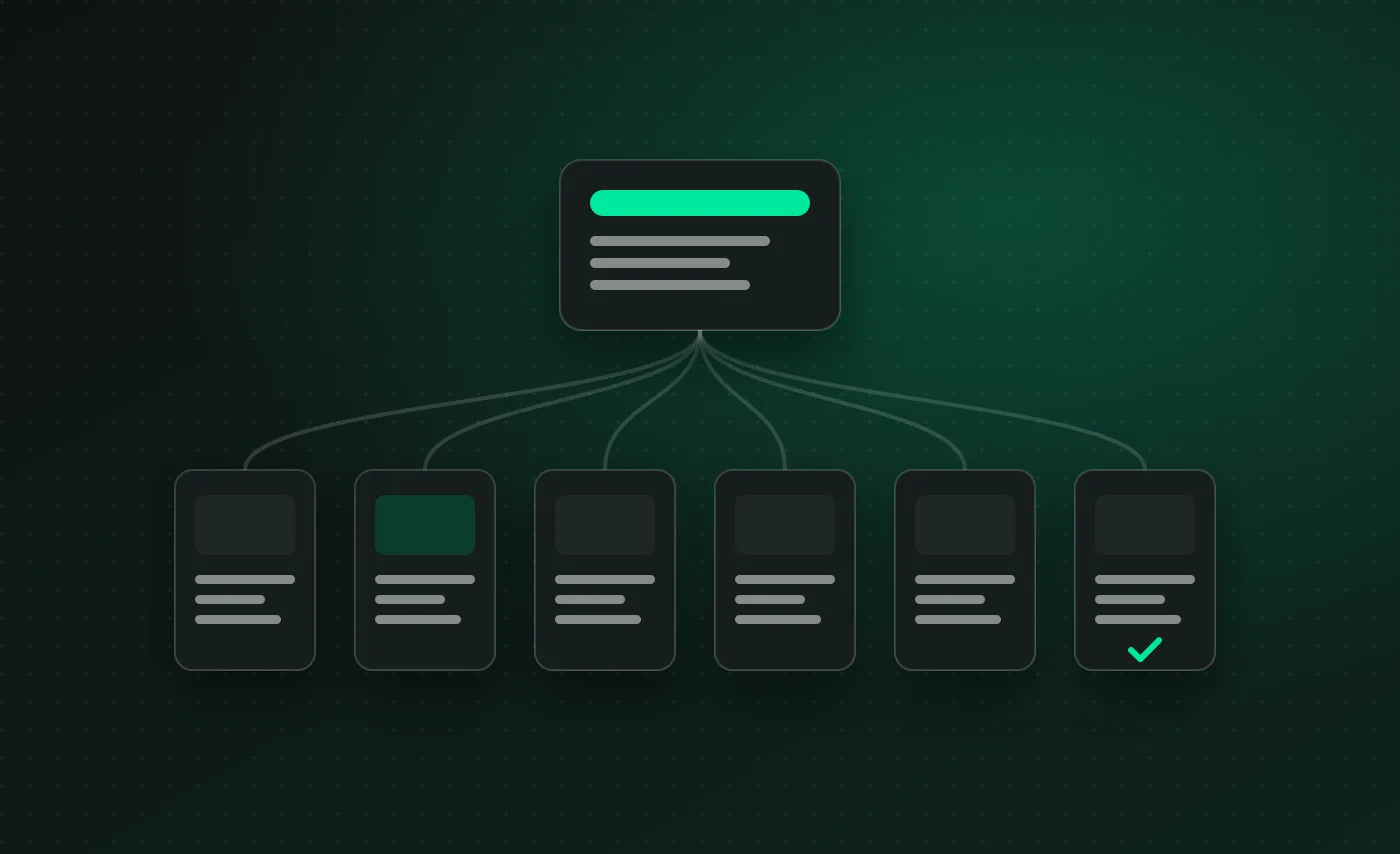
For a service page, this outline almost always works, whatever your line of work:
- A clear title that says what you offer and where.
- An introduction that restates the visitor’s need.
- What the service includes, in concrete terms.
- How it works, step by step.
- Proof: past projects, reviews, real figures.
- Frequently asked questions, with straight answers.
- The call to action, repeated at the end of the page.
Headings that actually say something
Many visitors only read the headings as they scroll down the page. So each heading needs to carry a piece of information: “A quote within 48 hours” rather than “Our responsiveness”. And for Google, there should be a single main heading per page, containing the essentials: your service and your city.
Website copywriting: writing to be read on screen
On a screen, people skim before they decide to read. A few simple rules make your text much easier to scan:
- short paragraphs, two to four sentences long;
- one idea per paragraph;
- bulleted lists for enumerations;
- key words in bold, sparingly;
- simple sentences, in the present tense and the active voice.
Specific calls to action
A plain “Contact us” isn’t very enticing. A good call to action says exactly what will happen next: “Get my free quote”, “Book a 30-minute call”, “See pricing”. Place one at the top of the page, visible without scrolling, and another one at the end, for visitors who have read everything.
What Google expects from your content
Google says it clearly in its guidance on creating helpful, reliable content: it aims to highlight content written for people, that shows real experience of the subject. In website copywriting, this means talking about your actual projects, your methods and the questions your customers really ask you. A text that could appear as is on a competitor’s website brings nothing new, either for readers or for Google.
Think about Google, without writing for it
Copy written for your customers is already off to a good start with Google. On top of that, simply add:
- the page’s main keyword in the title, the introduction and one or two subheadings, naturally and without forcing it;
- your city and your service area when relevant;
- links to your other pages: a service links to the matching projects, an article to the relevant service;
- a carefully written title tag and meta description for each page, which is what shows up in search results.
Don’t stuff in keywords: Google understands synonyms perfectly well, and your readers hate repetition.
The most common website copywriting mistakes
- Generic copy that could appear on any website in your line of work.
- Jargon and technical terms your customers don’t understand.
- Walls of text with no headings and no breathing room.
- Pages without a call to action.
- Copy-pasting from another site, or from one page to another on your own site: Google notices, and so do your customers.
Where to start?
Start with the most important page, which is often your main service, then move on to the homepage, which sums up the rest. Read your text out loud: whatever sounds wrong when spoken will sound just as wrong in writing. Then have a trusted customer read it: they’ll tell you honestly what isn’t clear. To list your pages before you start writing, my article on the essential pages of a business website gives you the framework.
The bottom line
Copy that talks about your customers, in their own words, organized to be skimmed and leading to a specific action: that’s what turns a visitor into a quote request. If you’d rather not do it alone, I help you structure and write your content, page by page, as part of building your website. Let’s talk.
How long should the text on a page be?
Long enough to answer your visitor’s questions, and no longer. A well-built service page often runs between 300 and 800 words, but length is never a goal in itself: clarity comes first.
Can I use artificial intelligence to write my copy?
As an aid, yes: to find an outline, rephrase, proofread. But your customers and Google are looking for your real experience, your examples, the way you work. Generic copy doesn’t set you apart.
Should I write my copy before or after the design?
Ideally before, or at least at the same time. The design is built around the content: a mockup filled with placeholder text often leads to unpleasant surprises when the real copy arrives.